The vision that has emerged through our conversations so far. This is not a final truth, but a distillation of our collective longings and political questions. It is an invitation to shape the gathering not only around what we resist, but around what we are ready to build together:
The Digital Futures Gathering is a radical, collaborative space for confronting digital violence and imagining futures rooted in justice, care, and collective power.
We gather across movements, geographies, identities, and generations to ask: Who is digital justice really for? And what becomes possible when survivors, especially those at the margins, are not only centered but co-shaping the field? In a world where digital spaces are often sites of harm, control, surveillance, and exclusion, this convening insists on reclaiming them as spaces of healing, hope and transformation.
We begin not from what is broken, but from what is possible. From feminist encryption to reparation without punishment; from intergenerational learning to human-oriented/life-oriented tech imaginaries – we invite curiosity, conflict, and courage. This gathering does not promise safety in abstraction. Rather, we are committed to building layered, transparent spaces: where power is acknowledged, where expertise from lived experience is honored, and where participation is not a checkbox but a practice. We are here to unlearn logics of isolation and criminalization, and to reimagine what digital solidarity can mean – not just for ourselves, but for and with those who are most often excluded from the discourse. We come together to listen. To ask hard questions. To hold contradictions. To map possible futures. And to ensure that when we leave, we leave not only with ideas: but with connections, roadmaps, and visions we can act on.
By Zara Rahman & Hannah Lichtenthäler

“The journey of a thousand miles begins with a single step – and having this starting point, a common ground, not only to intervene, but to reimagine what is there – sometimes feels like that insurmountable mountain. There is so much violence and injustice happening, locally, nationally, globally – on- and offline. Ever new technologies or ways, in which technologies can be used, that are meant to make our lives easier, end up being abused in the wrong hands – and disadvantage, harm, or violate those already marginalized in our society the most. For me, tackling digital violence, has always been a core of working in the field of feminist tech policy. Finding a way how and at the same time how to reclaim those technologies and digital media and reshape our digital futures, has been a journey that SUPERRR and this project allow.
Many people who I have spoken to in the interviews said, when I asked about how they would imagine fair, just, and violent-free digital futures, that we need to fundamentally change society in its belief and power systems – unlearning patriarchy, breaking with white supremacy, because those are the root causes for violence – being it on- or offline.
Having a child made me (re)think about the future, about futures, more than I would have imagined. Interventions and support for survivors of digital violence, for those at risk to be affected by any form of violence, are so important – there are still so many questions that remain unanswered, so many political decisions that reinforce the backlash against women’s and LGBTQI+ rights, so much help needed. But I don’t want futures that just put out fires everywhere, without changing the root causes, without being able to shape futures with the next generations in mind so that they don’t have to repeat the same work we have failed to accomplish over and over again.
As a survivor of different forms of violence myself, offline or online, I often wonder: what would the knowledge I have today have changed when I was in that situation? And part of that answer always comes down to education and awareness, as well as not feeling like I’m the only one this is happening to. Changing narratives and reimagining digital futures that start with survivor’s perspectives at heart and centre their voices and needs is key in this.”
By Hannah Lichtenthäler
But this work did not begin here.
Before we ever gathered, Hannah immersed herself in the field. She listened. Interviewed. Traced patterns. Held contradictions. She mapped the tensions, urgencies, and gaps that shape this fragmented ecosystem of digital justice – so that the convening could build from somewhere grounded. Her research didn’t just inform the process. It seeded it.
These recordings now sit alongside her insights – not as commentary, but as continuity. A testament to the labor of sense-making that precedes any moment of coming together.
Together, they explore the question:
How do we design a gathering that begins not with content, but with care?
That remembers: justice is not only a theme, but a method.
And that asks again and again:
What are we for, rather than against?
And how does that shape not only what we say, but how we show up, how we distribute, how we hold?
Facilitation is not about leading the way – it’s about listening the future into form. Holding space so others may arrive, unfold, and remember what they already carry.
My name is Ouassima, and I’ve been co-facilitating this process, not from a place of neutrality, but from the belief that facilitation is relational, embodied, and future-making. What does it mean to co-convene across discomfort, difference, and fatigue? How do we shape a space that is not just about sharing knowledge, but about sensing power, joy, and contradictions together? This notebook gathers some of the do’s and don’ts we stumbled through.
It reflects on the beauty of creating and holding space, and it dreams about what co-convening could mean when it’s not reduced to logistics, but expanded into politics of presence. Think of it as a time capsule of the process, shared in conversation with Pauli and others who held space alongside me.
Not linear. Not complete. But honest, and full of possible futures.
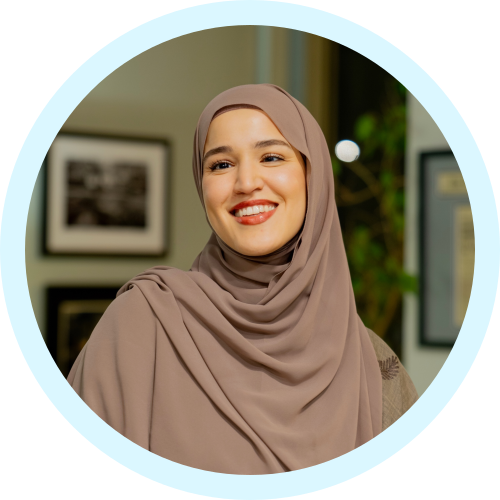
Ouassima Laabich is the Co-Founder and Co-Director of Imagineers Lab, an interdisciplinary space for holistic transformation and the co-creation of just and desirable futures. Her work is rooted in critical futures thinking, grounded in decolonial, community-centered and imaginative practices. She initiated and led the project Muslim Futures (www.muslimfutures.de) at SUPERRR Lab, where she wove together critical futurology, digital cultures, arts, and visionary politics. As a PhD candidate in Political Science at Freie Universität Berlin and former fellow at Yale University, her academic path is shaped by deep engagement with carceral logics, surveillance regimes, and Critical Muslim Studies.Ouassima is an experienced facilitator, speaker and moderator. She designs transformative spaces that center care, resistance and collective imagination—across movements, disciplines and communities. Her work is dedicated to imagining and enacting futures where justice and joy are inseparable.